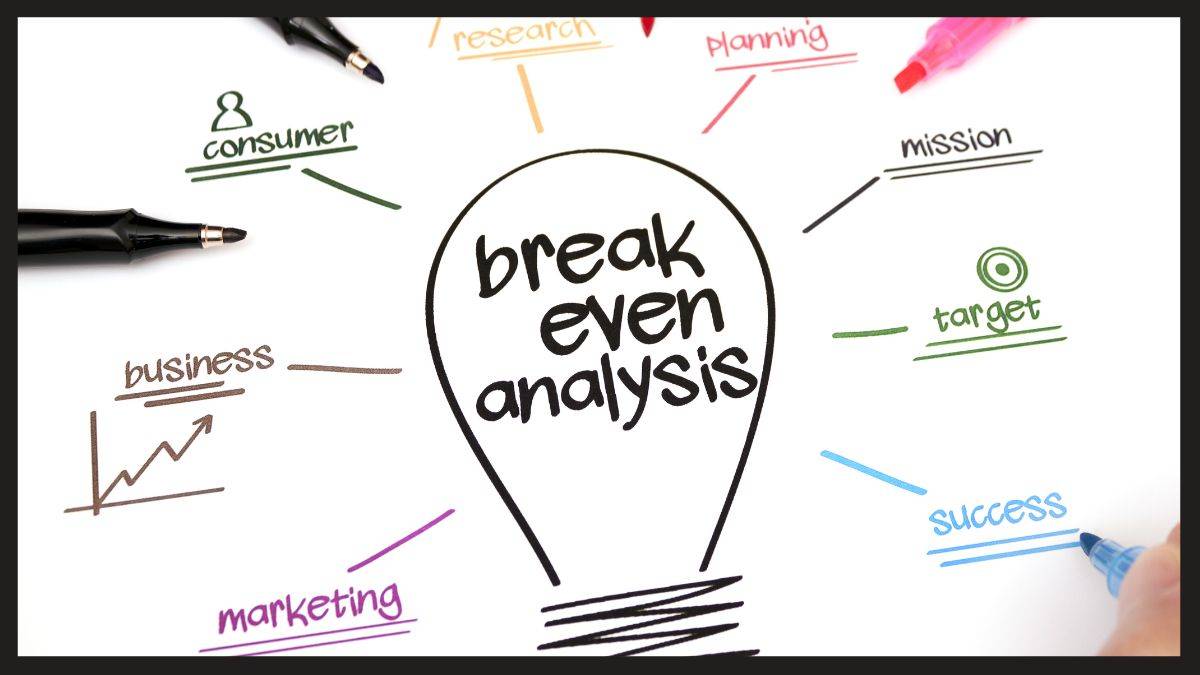
In the complex world of business finance, understanding when a company transitions from loss to profit is crucial. This pivotal point is captured by what is known as break-even analysis—a fundamental financial tool that empowers entrepreneurs and managers to make informed decisions. Whether you are launching a startup, managing an established enterprise, or evaluating a new product, mastering break-even analysis is essential to gauge financial health, guide strategy, and mitigate risks. This article explores the concept of break-even analysis, how to calculate it, and why it is a vital instrument for business success.
What Is Break-Even Analysis?
Break-even analysis is a method used to determine the sales volume at which total revenues equal total costs. This “break-even point” signifies the threshold where a business neither makes a profit nor incurs a loss. In simpler terms, it answers the question: How many units must I sell, or how much revenue must I generate, to cover all my expenses?
Understanding this threshold enables business leaders to:
-
Assess the viability of new projects or products
-
Set realistic sales targets
-
Manage costs effectively
-
Forecast profitability under varying scenarios
Key Components of Break-Even Analysis
To perform a break-even analysis, three financial elements must be clearly understood:
-
Fixed Costs: Expenses that remain constant regardless of sales volume, such as rent, salaries, and insurance.
-
Variable Costs: Costs that fluctuate directly with production or sales volume, like raw materials, direct labor, and packaging.
-
Sales Revenue: The income earned from selling goods or services.
Calculating the Break-Even Point
The break-even point can be calculated in units or in sales dollars.
Break-Even Point in Units
The formula to determine the number of units needed to break even is:
Break-Even Units=Fixed CostsSelling Price per Unit−Variable Cost per Unit\text{Break-Even Units} = \frac{\text{Fixed Costs}}{\text{Selling Price per Unit} – \text{Variable Cost per Unit}}Break-Even Units=Selling Price per Unit−Variable Cost per UnitFixed Costs
Here, the denominator represents the contribution margin per unit, which is the amount each unit sold contributes towards covering fixed costs.
Break-Even Point in Sales Revenue
Alternatively, to find the break-even sales in currency terms:
Break-Even Sales=Fixed CostsContribution Margin Ratio\text{Break-Even Sales} = \frac{\text{Fixed Costs}}{\text{Contribution Margin Ratio}}Break-Even Sales=Contribution Margin RatioFixed Costs
Where:
Contribution Margin Ratio=Selling Price per Unit−Variable Cost per UnitSelling Price per Unit\text{Contribution Margin Ratio} = \frac{\text{Selling Price per Unit} – \text{Variable Cost per Unit}}{\text{Selling Price per Unit}}Contribution Margin Ratio=Selling Price per UnitSelling Price per Unit−Variable Cost per Unit
Practical Example
Imagine a business with fixed costs of $50,000, selling a product for $25 per unit. The variable cost per unit is $15. The contribution margin per unit is $10 ($25 – $15). Applying the formula:
Break-Even Units=50,00010=5,000 units\text{Break-Even Units} = \frac{50,000}{10} = 5,000 \text{ units}Break-Even Units=1050,000=5,000 units
This means the company must sell 5,000 units to cover all its expenses.
Why Break-Even Analysis Matters
Break-even analysis is far more than a theoretical exercise; it is a practical compass guiding financial and operational decisions. Here are some compelling reasons why it matters:
1. Informed Pricing Strategy
Setting the right price is critical. Break-even analysis reveals how pricing decisions impact profitability and the minimum sales required to avoid losses. It enables businesses to test different pricing scenarios before implementation.
2. Cost Management Insight
By distinguishing fixed and variable costs, businesses gain clarity on how changes in operations affect profitability. This insight supports cost control and efficiency improvements.
3. Risk Assessment and Planning
Knowing the break-even point helps entrepreneurs understand the level of sales risk involved and prepare contingency plans. It also assists in securing financing by demonstrating the path to profitability to investors or lenders.
4. Strategic Decision Making
Launching a new product, entering a market, or expanding capacity involves upfront investment. Break-even analysis provides a framework to evaluate the financial feasibility and prioritize projects with a realistic outlook on returns.
5. Performance Monitoring
Tracking actual sales against the break-even threshold offers a clear indicator of business health, enabling timely corrective actions when necessary.
Limitations to Consider
While break-even analysis is a powerful tool, it does have limitations:
-
Assumption of Linear Costs: It assumes fixed and variable costs remain constant, which may not hold true at large scale or under dynamic market conditions.
-
Single Product Focus: Traditional break-even calculations often apply to a single product, complicating analyses for diverse product lines.
-
Exclusion of Time Value of Money: It does not account for cash flow timing or discounted returns.
-
Ignoring Market Factors: The model does not incorporate competitor actions, demand elasticity, or changing consumer preferences.
Enhancing Break-Even Analysis for Your Business
To maximize the value of break-even analysis:
-
Combine it with sensitivity analysis to explore how changes in costs, prices, or sales volumes affect profitability.
-
Use contribution margin analysis for multi-product portfolios to allocate fixed costs effectively.
-
Integrate break-even data with cash flow forecasts to ensure sustainable liquidity.
-
Employ software tools and financial models for dynamic and real-time analysis.
Conclusion
Break-even analysis is an indispensable tool in the entrepreneur’s financial toolkit, illuminating the critical point where revenues cover expenses and profitability begins. Its practical applications span pricing, cost management, risk assessment, and strategic planning. While it has limitations, when combined with other financial analyses, it offers profound insights that empower smarter business decisions.
By mastering break-even analysis, business leaders not only safeguard their ventures against unforeseen losses but also position themselves for sustainable growth. Understanding exactly what it takes to reach the break-even point transforms uncertainty into clarity—an invaluable advantage in the competitive landscape of commerce.
For more information, follow below useful resources-
- If you’re an entrepreneur or small business owner looking for practical strategies that actually work, BusinessbyLL is a valuable resource. From startup finance to leadership skills and digital growth, the blog breaks down essential topics in a clear and insightful way to help you scale your business confidently and sustainably.
- Building long-lasting relationships and generating leads in the B2B world isn’t easy — but B2BIdea helps you master both. With expert articles on digital marketing, conversion funnels, client retention, and sales psychology, this blog is a must-read for B2B professionals who want a smart edge over the competition.
- Whether you’re launching a new venture or managing a growing enterprise, BusinessAda provides well-researched advice across operations, innovation, funding, and business structure. The blog is tailored for ambitious entrepreneurs who want to minimise risks and maximise growth with practical, no-fluff insights rooted in real-world success.
- Staying ahead in the digital economy takes more than just ideas — it takes execution. eBusinessEvon offers hands-on guides about eCommerce, SaaS, automation, and digital leadership. Whether you’re scaling a startup or optimising an online store, the content helps you implement changes that drive measurable growth.
- Small business owners face daily hurdles — and iSupport4Business exists to guide you through them. Covering everything from workflow improvements to team management, compliance, and customer support, the blog equips you with practical tools to keep your business stable, efficient, and ready for long-term success.
- Looking for bold, future-focused insights into entrepreneurship and business strategy? NewCapsBusiness publishes original ideas, productivity tips, and innovation strategies that help founders and executives push boundaries, adopt new thinking, and take decisive action in uncertain and competitive markets.
- With a focus on smart scaling and lean growth, MeeuBusiness is designed for entrepreneurs who want to build resilient, modern businesses. The blog explores everything from mindset and planning to branding and digital systems, offering insights that work in the real world — not just theory.
- If you’re tired of fluff and want real advice that delivers results, BusinessOWO is worth your time. With content on entrepreneurship, digital trends, monetisation, and operations, the blog helps business owners tackle both the day-to-day grind and long-term strategy with confidence.
- Modern business requires both expertise and adaptability, and BusinessGExpert balances both. The blog dives deep into market positioning, branding, business tech, and workflow optimisation to support professionals who want to run leaner, smarter, and more profitable companies.
- For those who believe ideas fuel success, IdeazBusiness helps turn concepts into action. Covering startup validation, funding, marketing, and sustainability, it offers readers a clear blueprint to transform their creative thinking into real-world business models that work in today’s fast-moving markets.
- Running a small business means wearing multiple hats — and SmallBusinessLtd understands that perfectly. From finance and HR to marketing and legal tips, the blog offers comprehensive guides that help you stay on top of your business while making informed, profitable decisions.
- In an age where attention is everything, MyBusinessHype focuses on brand visibility, digital storytelling, and audience engagement. It’s ideal for business owners and marketers looking to boost their brand authority and create long-term digital traction without relying solely on ads.
- Looking to convert more leads into loyal customers? Business2Lead breaks down sales psychology, funnel design, and CRM workflows with clarity. The blog is a powerful resource for anyone looking to turn digital visibility into predictable business growth.
- From personal productivity to enterprise innovation, IKDBusiness covers the mindset and mechanics of building successful ventures. It’s a strong read for ambitious professionals who want to upgrade their systems, develop leadership capacity, and execute consistently in changing environments.
- Business success is 80% systems and 20% hustle. BusinessACG offers content focused on frameworks, automation, delegation, and scaling strategies that empower solopreneurs and teams to grow without burning out or losing focus.
- Ambitious founders need a strategic edge, and 3SIBusiness provides it. From business modelling to team dynamics, customer acquisition, and modern marketing tactics, the blog equips you with high-leverage knowledge for sustainable success in competitive industries.
- Starting or growing an online business? eBusinessite explores the best platforms, tools, and techniques to help you create efficient workflows, improve UX, and optimise conversions — all with minimal jargon and maximum practicality.
- If you want to blend content strategy with business performance, BizMediaInc is the blog for you. It delivers editorial insights, branding techniques, and digital publishing trends that help you build strong narratives and monetise media-driven businesses.
- Problem-solving is at the heart of every business, and BiznesSolution shares smart ways to address common operational, tech, and scaling issues. Whether you’re in retail, SaaS, or consulting, you’ll find content that speaks directly to your business needs.
- For a crash course in entrepreneurship, marketing, and digital growth, Business101Guide is a valuable bookmark. With beginner-friendly and expert-level resources alike, it helps readers build strong business foundations and scale operations with purpose and precision.
- If you’re focused on branding and market visibility, BusinessBrandBoost is your secret weapon. It explores online presence, storytelling, reputation management, and digital reach — giving businesses the tools to stand out in noisy markets.
- Business doesn’t have to be slow — BusinessSprint360 proves that. With high-impact content on decision-making, lean methods, and agile marketing, the blog shows professionals how to achieve fast results while keeping their long-term goals in view.
- Looking to grow alongside like-minded professionals? JoinBusinessHub blends expert advice with a collaborative mindset. It focuses on networking, community building, and scaling strategies for entrepreneurs who believe in collective momentum.
- Collaboration, systems, and resilience are at the core of StrongBusinessLink, a blog that emphasises long-term business health. Learn how to optimise partnerships, handle logistics, and future-proof your operations in uncertain times.
- If you like structured advice that gets to the point, Top10BusinessTips delivers high-value content in an accessible format. Perfect for busy entrepreneurs, its bite-sized lessons span leadership, finance, marketing, and tech — all with clear takeaways.
- Stay current with evolving trends, startup hacks, and no-nonsense business advice on TryBusinessToday. The blog is ideal for those who are experimenting, iterating, and looking for proven tips to guide their next big decision.
- Whether you’re a solopreneur or managing a growing team, PrimeBusinessZone delivers insights on strategy, finance, marketing, and automation. Its practical focus ensures every article brings you closer to real results, not just theory.
- Your startup deserves more than just enthusiasm — it needs clarity. BusinessStartupJourney walks you through ideation, validation, funding, and growth stages with relatable stories and expert-backed guidance.
- Creativity is the secret sauce in business, and CreativeBusinessEdge helps you unleash it. Whether you’re building a personal brand or a product empire, this blog blends design thinking with marketing strategy to deliver fresh, profitable ideas.
- To thrive in today’s global, tech-driven marketplace, you need broad awareness and adaptable skills — and DynamicBusinessWorld delivers both. It features deep dives into innovation, remote leadership, and competitive analysis from a global business lens.